Diversification Explained Simply
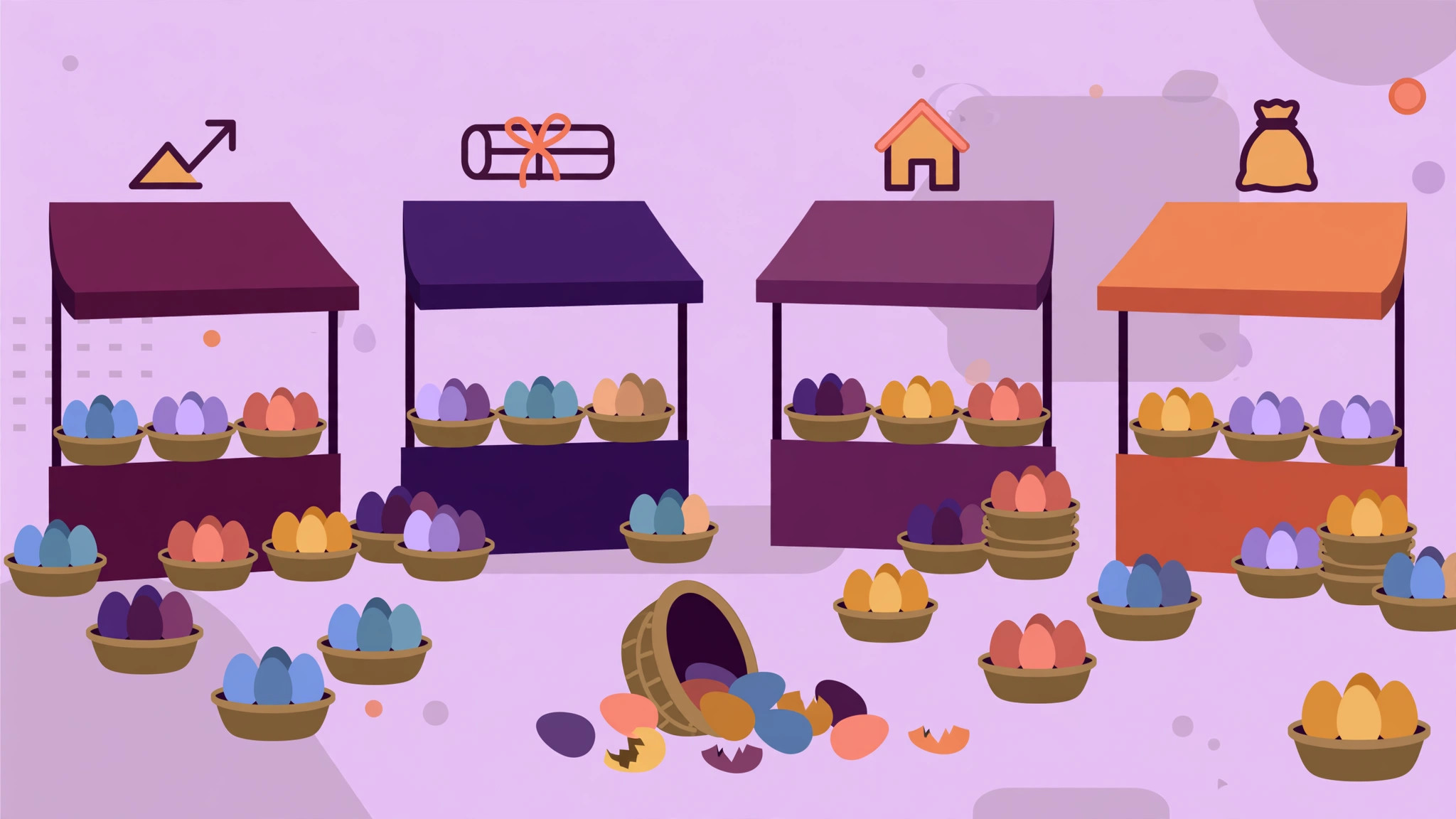
Eggs, baskets, and what actually breaks
Diversification is the practice of spreading money so that no single event can wreck the whole plan. A single company can collapse; a whole market of hundreds of companies, across countries and industries, cannot all collapse for the same reason at the same time. The protection works because different investments respond differently to the same news: when one falls on a bad year for its industry, another may be flat or rising. The result is not higher return, exactly. It is a smoother ride for a similar return, which matters because a smoother ride is one real people can stay on.
The layers that matter
The strongest layer is across types of asset: shares, bonds, property and cash behave differently, so a mix steadies the whole. Within shares, spreading across companies, industries and countries removes the single story risks, a fraud, a failed product, a local crisis. A third layer is time: investing gradually, month by month, rather than betting everything on one day price, spreads your entry points across good and bad markets alike. Fund products bundle the first two layers into a single purchase, which is why they are the default vehicle for most long term savers who do not want to become stock pickers.
What diversification cannot do
It cannot remove market wide falls; in a general crash, most investments fall together for a while, and the diversified investor falls less and recovers with the market rather than being wiped out by its worst member. It also cannot rescue a bad plan: spreading money across ten poor investments is still poor investing, and over diversifying into things you do not understand adds complexity without safety. The aim is deliberately unglamorous: own a broad slice of the productive economy, keep costs low, and let time and compounding do the heavy lifting. Our guides on index funds and dollar cost averaging explain the two most common ways ordinary savers put that into practice. A simple self test reveals whether you actually have it. Name the single company, sector or country whose disaster would damage your plans most. If the answer comes instantly and the damage would be severe, the portfolio is a bet wearing a portfolio coat. Fixing it rarely means selling everything tomorrow; it usually means directing new contributions toward the gaps until the shape balances. Diversification is less a purchase than a direction of travel, maintained a little with every payday, and checked once or twice a year with fresh eyes.
Put it into numbers
The free calculator that goes with this guide:
Regular savings growth calculator