How Much Do I Need to Retire?
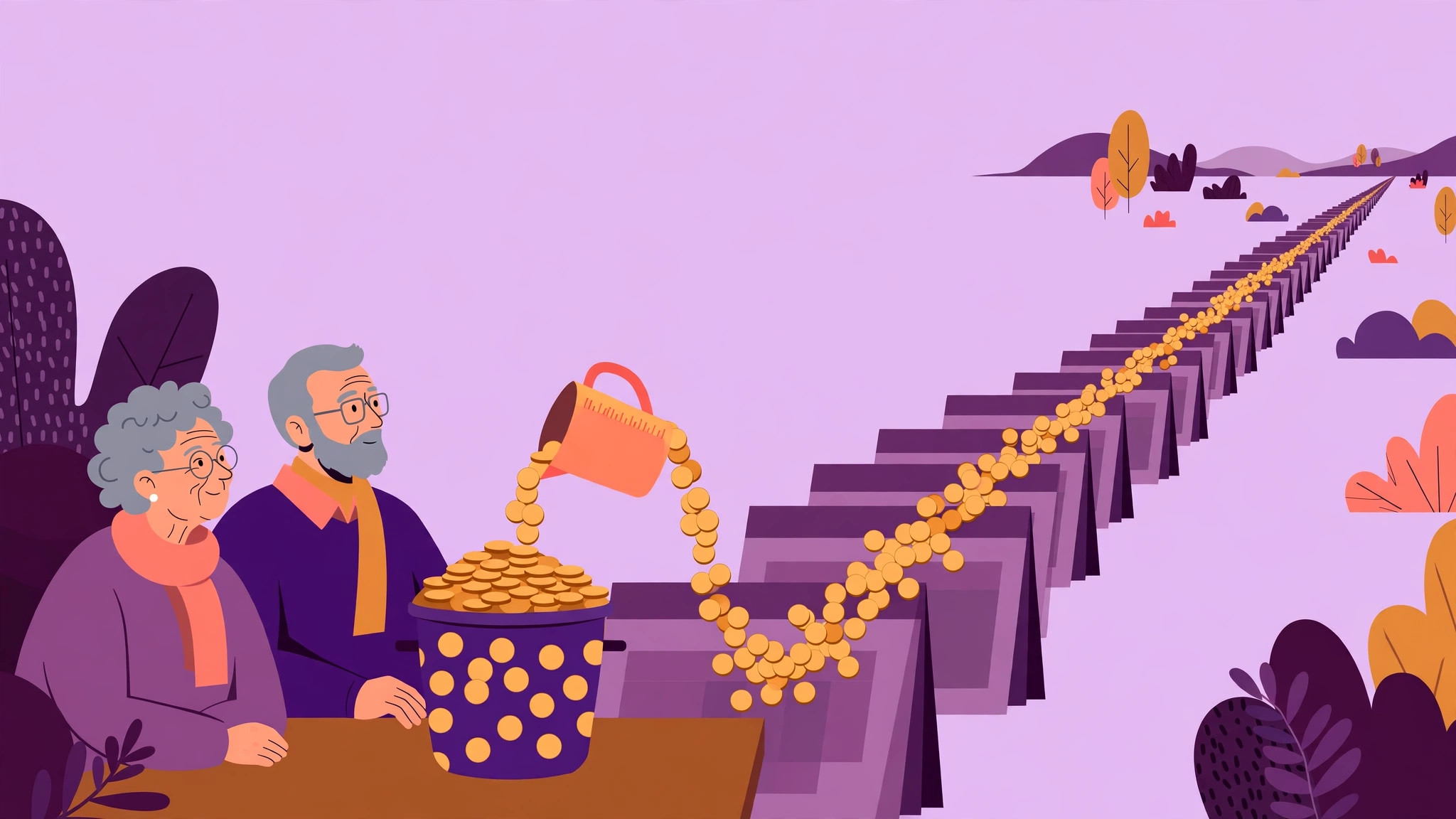
Start from spending, not salary
How much you need to retire depends on what you will spend, which is usually less than your salary suggests. Work costs vanish: commuting, the pension contributions themselves, perhaps a mortgage that ends around the same time. Other costs grow: heating a home all day, health costs, the travel you finally have time for. Most planners land somewhere between half and three quarters of working income as the retirement spending target, but your own last year of bank statements, adjusted for the changes above, is a better guide than any percentage. Write the yearly figure down; everything else in the calculation hangs off it.
Multiply by the years, then subtract help
A rough and respected shortcut multiplies your needed yearly income by 25 to size the pot, which corresponds to drawing about 4 percent a year, a rate long term studies found sustainable across many historical periods, though never guaranteed. If you need 24,000 a year from your own pot, the target is roughly 600,000. Then subtract what arrives anyway: a state pension of 10,000 a year cuts the needed private income to 14,000 and the target pot to about 350,000. Part time work in early retirement, downsizing, or a later retirement date each move the number down again, which is why the levers are worth knowing before the number frightens you.
Test it instead of trusting it
Shortcuts size the target; simulation tests it. Our drawdown calculator takes a pot, a growth rate and a yearly withdrawal, and returns how many years the pot lasts, which is the question that actually matters. Run your target pot at cautious growth, then at lower growth, and see whether the pot outlives a retirement that may last thirty years or more. If it falls short, the fixes are known and combinable: save a little more monthly, retire a little later, or plan spending a little lower in the early years. A number you have tested three ways is a plan. A number from a headline is just a worry with decimals. One more adjustment protects the estimate: plan for a longer life than the average, because averages conceal the real risk, which is not dying early but living long. A plan that funds spending to age 95 with something in reserve is not pessimism; it is the standard a good adviser would apply to their own family. If the resulting number still feels large, remember it is built across an entire career of contributions, employer additions and growth, three engines pulling together. The target is a lifetime project, and it is supposed to look like one.