Simple vs Compound Interest
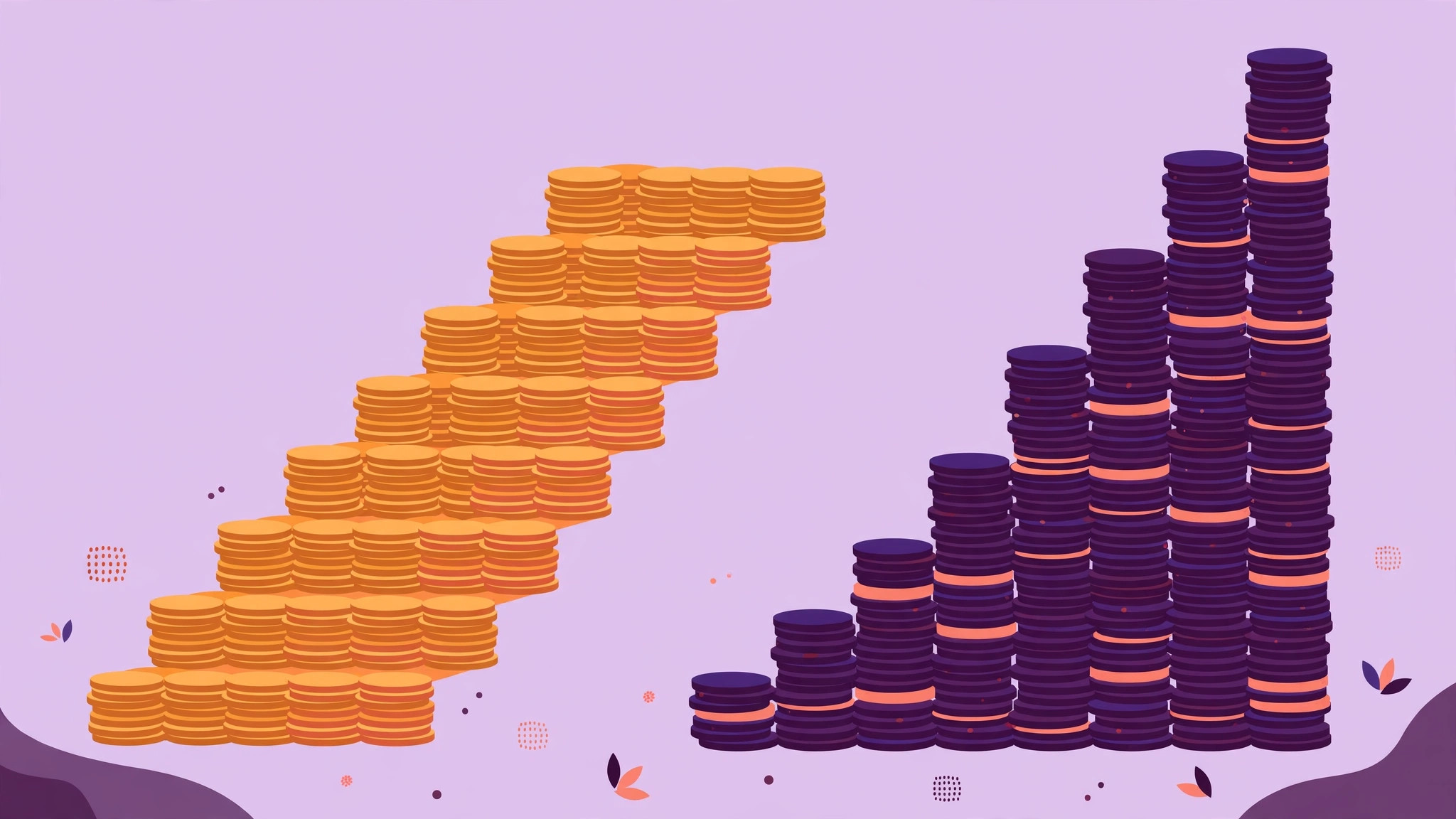
Two ways of counting the same price
Both methods price the use of money with a rate and a time, but they disagree about what the rate applies to. Simple interest applies it to the original amount, every period, unchanged: interest equals principal times rate times time. Compound interest applies it to the current balance, which includes interest already earned or owed. In the first year the two are identical, because there is no past interest yet. From the second year they separate, slowly at first, then dramatically, as the compounding base keeps growing and the simple base never does.
Where each one is used
Simple interest still appears on some short term loans, certain car finance agreements, and in the stated working of some bonds and penalty calculations, where its predictability is the point. Compound interest runs almost everything long term: savings accounts, investments, mortgages and credit cards all compound. Exam questions and older textbooks love simple interest because it can be done in one line, which is exactly why it misleads: real money, over real years, almost never behaves that way. Always check which method a product uses before comparing its rate with another product rate.
A quick feel for the gap
At 6 percent over five years, 10,000 grows to 13,000 with simple interest and about 13,382 with yearly compounding; a gap of 382. Over twenty years the same money reaches 22,000 simple and about 32,071 compounded; a gap of more than 10,000, larger than the original sum. Frequency matters inside compounding too: monthly compounding beats yearly at the same stated rate, which is why the APY conversion exists. Our simple interest calculator shows both results side by side for your figures, and the compound calculator lets you change the compounding frequency to see the smaller, real difference it makes. The naming causes one more trap in the wild: a product quoting a flat rate is often using simple interest on the original amount for the whole term, even while you repay monthly, which makes its true cost far higher than the same figure as a normal reducing balance rate. Flat rate car finance is the classic example, where a 5 percent flat rate can cost roughly like a 9 to 10 percent APR. Whenever a rate is described as flat, translate it into total amount payable before comparing it with anything.