Sinking Funds: Saving for Bills You Know Are Coming
The bills that pretend to be surprises
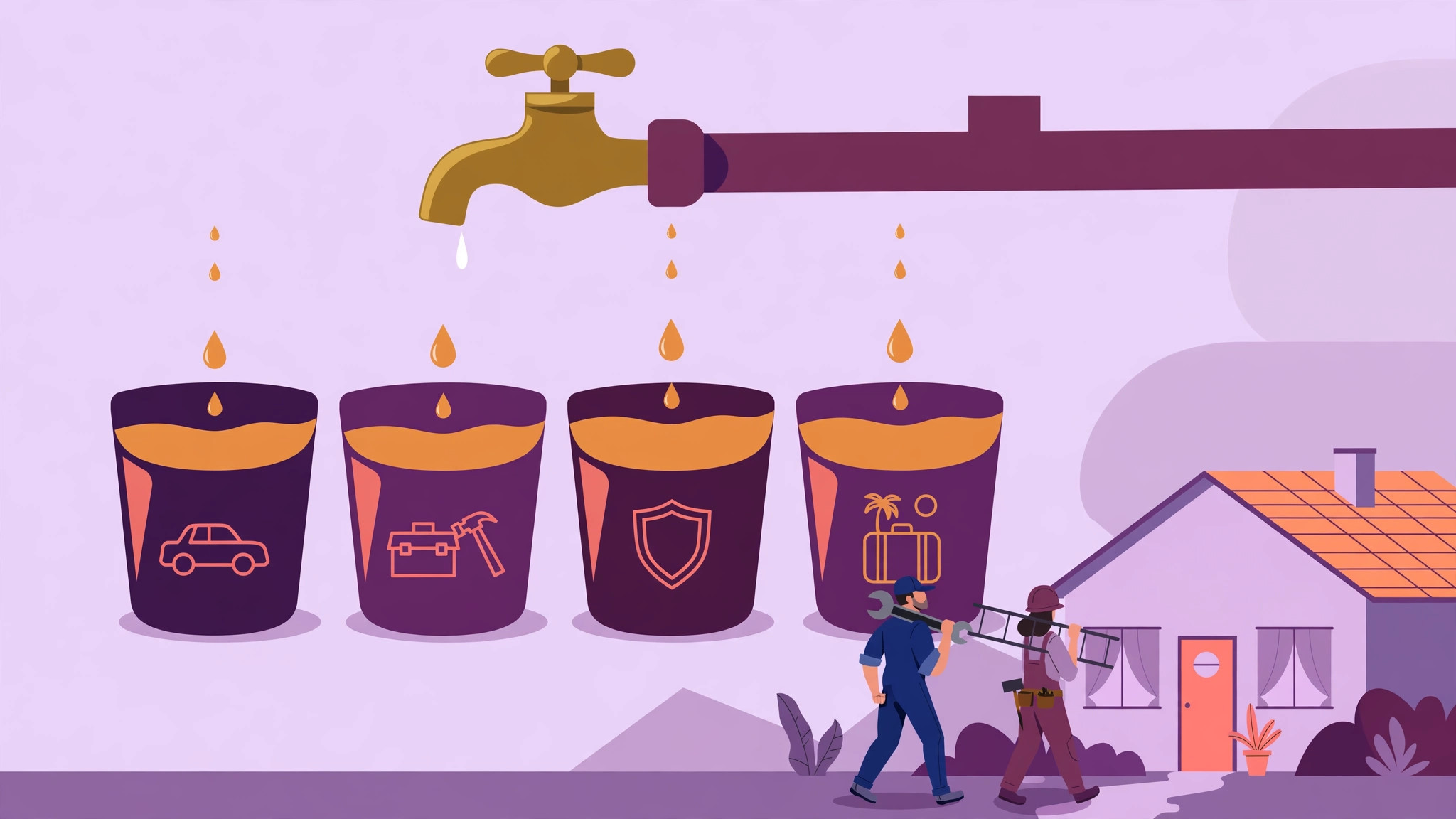
Once a year the car insurance lands. Every few years the car itself needs tyres, the boiler needs replacing, the roof needs work. None of these are surprises; they are certainties with unknown dates, and households that treat them as emergencies fund them with the most expensive money there is, credit at the moment of crisis. A sinking fund is the counter habit: a pot, or several named pots, fed monthly by the expected yearly cost divided by twelve, so that when the bill arrives the money is already sitting there wearing its name. The phrase comes from old accounting for replacing assets, and the idea has survived because it works.
Setting one up in twenty minutes
List the irregular costs of your year and your life: insurance premiums, car servicing and repairs, home maintenance, holidays, festivals and birthdays, appliance replacement, professional fees. Estimate each yearly total generously rather than hopefully, add them up, divide by twelve, and automate that amount on payday into a separate savings account. Some people keep one pot and a written split; others use the multiple pots many banks now offer inside one account. Either works if the money is visibly spoken for. Our savings goal calculator sizes any single pot; the budget guide shows where the monthly total sits inside a normal month so it stops competing with everything else.
How it changes the feel of a year
The first year of a sinking fund is the hardest, because you are paying for this year bills while building next year fund. After that the system turns a corner: bills stop being events. The insurance renewal becomes a transfer, not a crisis. A dead washing machine becomes an errand, not a debt. People who run sinking funds often report that this, more than any investment, is what made their money feel calm, because the ambushes were the stress, and the ambushes are now scheduled. It is the least exciting idea on this site and, for many households, the most valuable one here. Two refinements make the system sturdier. First, review the list yearly: costs creep, cars age, and last year estimate for home maintenance rarely survives contact with a real roof. Second, when a pot is used, do not raid the others to refill it instantly; let the monthly rhythm rebuild it, and raise the contribution only if the same pot keeps running dry. A sinking fund that needs occasional topping up is still doing its job. The standard is not perfection; it is that no predictable bill ever again arrives as a financial emergency.