The Time Value of Money
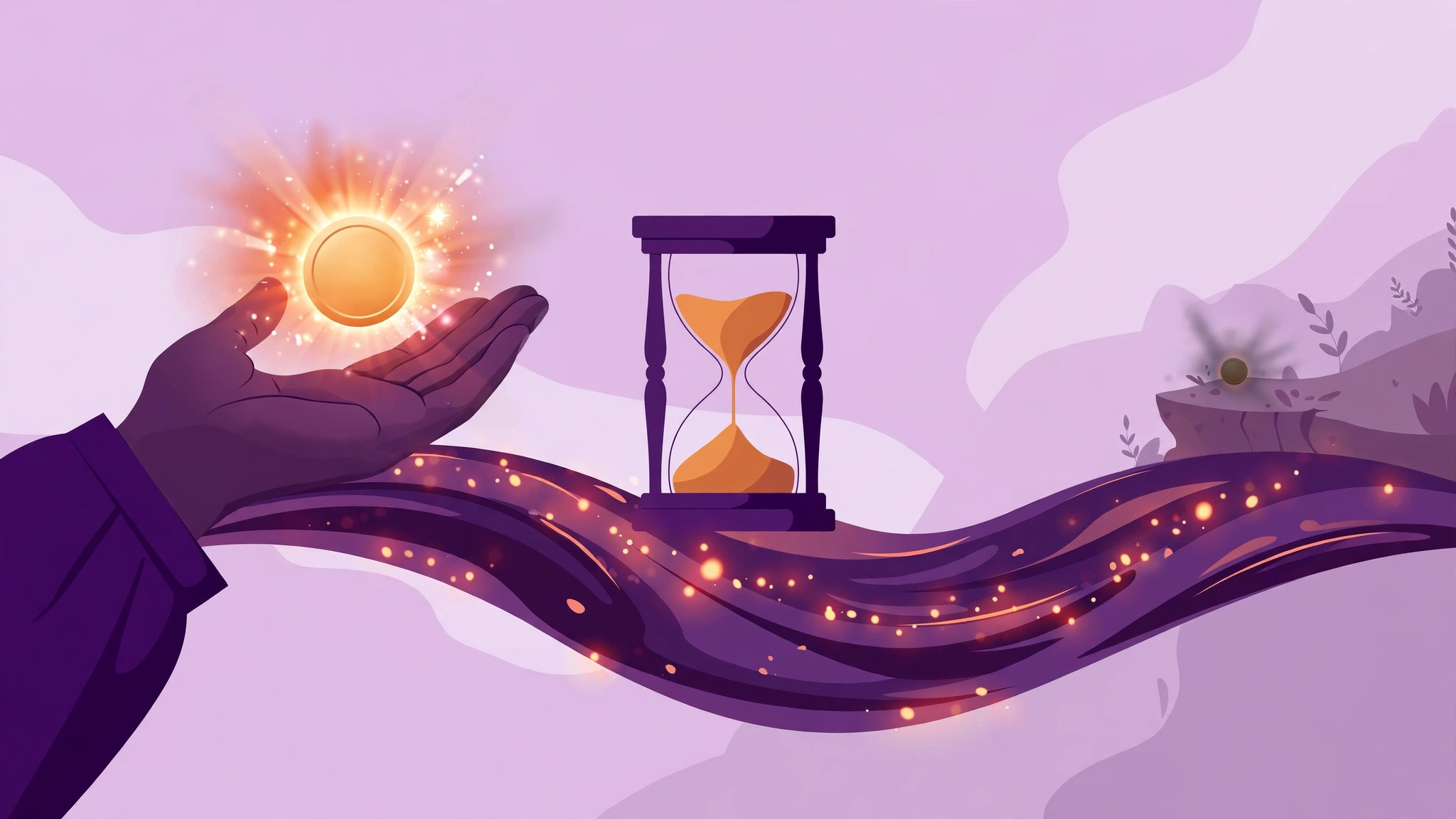
The idea in one breath
A sum of money is worth more now than the identical sum later, for three separate reasons that stack. First, money now can be put to work and grow, so waiting means giving up growth. Second, prices tend to rise, so later money buys less. Third, the future is uncertain: a promise of money later carries some chance, large or small, of never arriving, while money in hand has already arrived. Interest exists because of this idea. It is the price paid to the person who waits, charged by the person who does not want to. Every formula on this site is, underneath, this one idea wearing arithmetic.
How it prices everyday choices
Once seen, the idea appears everywhere. A shop offers 5 percent off for paying a year upfront: worth taking if your money would earn less than that, after adjusting for risk. A builder offers installments at no extra cost: worth taking, because you keep the money working longer. A pension offers a bigger lump sum or a bigger monthly income: a time value comparison, not a guess. Even the choice between a higher salary now and a bigger pension later is the same trade in a suit. The practical tool is a personal discount rate, roughly what your money reliably earns, used to convert future amounts into today terms before comparing them.
The two calculators that do the converting
Present value pulls future money back to today; future value pushes today money forward. Our two calculators sit side by side on the tools page and are exact mirrors: 10,000 in five years at 5 percent has a present value near 7,835, and 7,835 today grows to almost exactly 10,000 at the same rate. Fluency with this pair changes how offers read. Prices quoted in the future, a payout in ten years, a cost spread over a decade of installments, stop sounding like single numbers and start sounding like what they are: amounts with dates attached, and the date is half the information. A homely test shows whether the idea has landed. Offered 1,000 today or 1,100 in a year, most people sense the second is better only if they trust the payer completely and cannot earn 10 percent themselves in the meantime. Both instincts are the time value of money working: the growth given up, and the risk of the wait. Finance simply writes those instincts as formulas so they can be applied to amounts too large for instinct, across periods too long for memory, in decisions too important for guessing.